


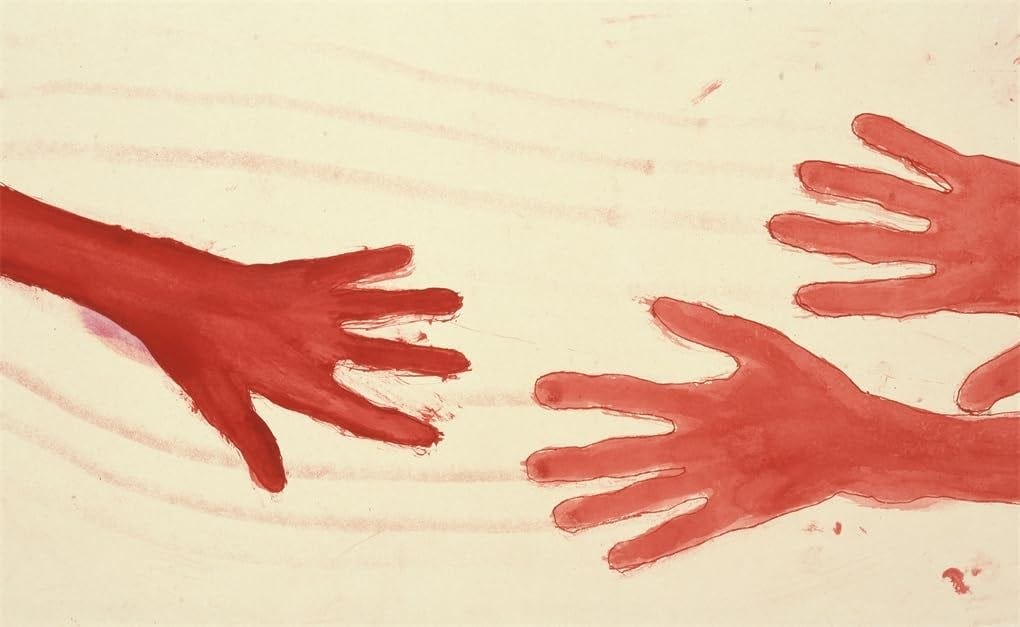
I never understood it, not fully, until I was sitting on the floor of my front hallway, freshly postpartum, clutching my car keys. They were both my salvation and my doom. The world had narrowed to a pinhole. All I could see was my own failures, how I was certain I was already damaging my children, the suffocating logic that said the only way out of this darkness were those keys, my Honda Pilot, and a cliff into the ocean.
People brought meals. People checked in. People told me I was doing great. I smiled, said thank you, and swallowed the truth. No one saw how the floorboards blur when I stood up too fast. No one asked why I cried in the shower every morning.
The delivery of my third child was the most difficult of all. I had sensed something was wrong toward the end of the pregnancy when my blood sugar stopped fluctuating entirely. Even normal post-meal spikes vanished. I had mild gestational diabetes and I was monitoring closely, but nothing was changing.
Like the hypervigilant healthcare provider I am, I turned to the literature. The results were inconclusive. Stabilizing glucose could indicate placental failure — or it could mean nothing at all. I told myself not to panic, but my instincts wouldn’t let go. I went to my doctor. We scheduled a C-section for the next morning. I was full-term. There was no reason to wait.
During the surgery, the placenta came out in pieces. I hemorrhaged on the table. They stabilized me, and my daughter arrived healthy. But I was handed a newborn as if nearly dying were just a small inconvenience. I had a baby who wouldn’t sleep unless she was held, and I was caring for a 16-month-old and a 6-year-old. My body barely had time to knit itself back together. My mind had no time at all.
Everyone calls it recovery. It didn’t feel like that. It felt like drowning — silently, methodically — in a tide no one else could see. I bled through pads that should have lasted hours. My heart hammered hard enough to rattle my ribs. My incision burned. My head swam while I fed a baby every thirty minutes, rocked her on trembling legs, kept a toddler from climbing bookshelves, and initialed homework logs for a first-grader who suddenly looked so much older than his years.
My body was wreckage. My mind, debris.
Mothers don’t get the luxury of unraveling. We learn to bleed more quietly.
People brought meals. People checked in. People told me I was doing great. I smiled, said thank you, and swallowed the truth. No one saw how the floorboards blur when I stood up too fast. No one asked why I cried in the shower every morning. No one realized the woman they thought was strong was actually standing on a fault line. I didn’t realize it either. Not yet.
***
Postpartum depression doesn’t crash in like a tidal wave. It erodes. Edges first, then center. It starts with a voice. A whisper, really. The inner critic you normally swat away without effort — the one that says you’re doing everything wrong. But when you’re recovering from trauma without time to truly recover, when you’re not sleeping, when you’re caring for three small children with almost no help, your ability to silence that voice disappears.
So it speaks louder.
When your baby wails at 2 a.m. and nothing comforts her, the voice insists you’re failing her. When your milk supply crashes and breastfeeding ends, you are a terrible mother who can’t feed her daughter the way you are supposed to. When you switch to formula and she reacts to everything, crying in pain, inconsolable for hours, you’re failing her all over again. When your toddler cries because you can’t pick her up, you’re neglecting all your kids. When your first grader asks you to read with him for the 500th time and you snap because you have nothing left to give, you’ve scarred him forever.
Every small moment becomes proof in a case you’re convinced you’re losing. And when the voice builds enough evidence against you, it offers the only solution that makes sense to an unraveling mind:
If you love them, you’ll disappear.
It begins like mold growing in corners no one checks. A thought you wipe away at first. Then, a thought you consider. A thought that sits beside you, night after night, whispering twisted mercy.
If you weren’t here, they’d be better off.
If you left, the damage would stop.
If you vanished, they would finally breathe.
It becomes a companion. Cruel, but steady. Steadiness feels like truth when you’re drowning.
***
At first, the thoughts terrified me. I told my husband I was drowning and that I wanted to die. I told him about the voice narrating my motherhood as a catastrophe. He didn’t know what to do. So he listened. Quietly. And he said very little.
He didn’t reinforce the narrative, but he didn’t challenge it either. To me, that was as dangerous as agreement.
He isn’t saying it’s not true, so it must be true.
He isn’t pushing back, so you must be too much.
He isn’t stepping in, so everyone must really be better off without you.
That’s how I ended up in the front hall with the keys in my hand, sobbing. I didn’t want to leave my family. I loved them more than anything. But I was convinced that loving them meant leaving them.
He saw me crying. He heard the baby screaming. He scooped her up and carried her over to me. He placed her in my arms and said, “Mommy, we love you. Are you okay?” Then he hugged me. His sister toddled over and wrapped her arms around my leg. The baby settled on my chest.
None of it was my husband’s fault. He just didn’t know how to meet me in that darkness. He didn’t know what to say.
But my son did.
He saw me crying. He heard the baby screaming. He scooped her up and carried her over to me. He placed her in my arms and said, “Mommy, we love you. Are you okay?” Then he hugged me. His sister toddled over and wrapped her arms around my leg. The baby settled on my chest.
Three small bodies pressing into mine. Three little anchors tethering me to the world. Three reasons, handed to me in the middle of the darkest moment of my life.
I didn’t drive off that cliff, though the distance between intention and action felt terrifyingly thin. I was saved by something small and ordinary: the interruption of their love.
***
The next day, I did the hardest thing I’ve ever done. I asked for help. I found a psychiatric nurse practitioner who specialized in women’s mental health. I started medication. I found a therapist. I asked for help with cleaning, cooking—things that felt like admissions of failure but were really acts of survival. Bit by bit, the darkness receded. Bit by bit, the voice quieted. Bit by bit, I began to rewrite the script. I was sick, not broken. Hurting, not harmful. Drowning, not disposable.
Once I said that aloud, the voice that wanted me gone began to lose its shape. This is how I survived. Not by being strong, but by being open. Not by loving my children, but by letting their love reach me. Not by silencing the darkness, but by refusing to disappear inside it.
Choosing to stay is the bravest thing I have ever done.
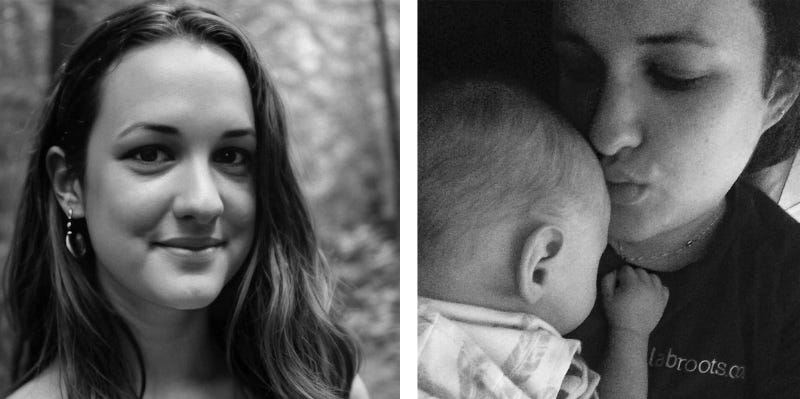
Emma Logan is a writer and poet based in Salem, Massachusetts. Her work has been recognized as a finalist for the River Styx Poetry Contest, and she has a creative nonfiction piece forthcoming in Months To Years. She writes about motherhood, silence, survival, and the fierce reclamation of voice.

Starting February 1st, 2026
28 x 20: Daily Prompts for Writing Super-Short Personal Essays in 20 Minutes

28 days. 28 prompts. 28 micro-stories. 20 minutes each. No time to overthink it. Y'all, February is the shortest month. You can do this.
Caregivers don't either. Sometimes, I feel like it's exhausting being a woman. 😢
Very powerful and that image of you with the pile of kids surrounding you was so touching. ❤️🙏🏼