

Lost and Found: George's Serbian Textbook
A bookstore mix-up sparks one sleepless night with a stranger and Gertrude Stein


The book wasn’t mine. This feels important to establish right away. Colloquial Serbian: The Complete Course for Beginners sat in my tote bag from Book Culture, wrapped with a note that said, “Hold for George,” secured by a rubber band. George had paid $54.95 in cash. I know this because the receipt was tucked inside the front cover like a bookmark to someone else’s life.
I don’t know how it ended up in my bag. I’d bought three books with my own money that day: The Marriage of Cadmus and Harmony, The Descent of Alette, and a bright turquoise book called Born to Slow Horses. Books I chose. Books that belonged to me. But here was George’s Serbian textbook, and here I was at 2 AM, eating Organic Trek Mix Simply Cashew Almond and Cranberry (14 ounces, 397 grams, USDA Organic, Kosher), drinking Sparkling Lime Spring Water (sodium-free, 33.8 ounces), and opening to page one.
Did George know their book was missing? Were they somewhere conjugating existence in the wrong language? Maybe George was never going to learn Serbian anyway. Maybe the book was an impulse purchase, a dream deferred, a gift for someone else named George.
Maybe it was the Gertrude Stein biography I’d been reading earlier that week. She’d written, “I really do not know that anything has ever been more exciting than diagramming sentences.” She hated nouns. Called them unnecessary. Said they were names that got in the way of seeing.
Chapter 1: Upoznavanje (The Meeting)
The first thing Serbian teaches you is the verb “biti” – to be. Before hello, before thank you, before “Where’s the bathroom?” you learn existence itself. Ja sam – “I am.” Ti si – “You are.” The book warns that Serbian grammar “may appear complicated at first, as it contains so much new to the English speaker.”
I thought about George, whoever George was. Did George know their book was missing? Were they somewhere conjugating existence in the wrong language? I am lost. You are learning. We are strangers.
Gertrude Stein would have loved Serbian’s approach to questions. In Serbian, you can make any statement a question just by your intonation. No question mark needed in speech. “What is your name” becomes “What is your name” becomes “What is your name,” each rising inflection creating new uncertainty. My computer’s grammar check threw a fit, green squiggles everywhere, but Stein knew: punctuation is just another form of possession.
Chapter 2: The Traveler
By 3 AM, I’d learned that Serbian has three genders for nouns (masculine, feminine, neuter), seven cases, and two aspects for every verb. Everything you say must agree with everything else, gender matching number matching case. A linguistic democracy where every word votes.
The textbook presented a dialogue: Tanja and Ljiljana meet on a Belgrade street. Fill in the blanks. Make meaning from fragments.
I wrote:
“Mislim da ste umorni” – “I think you are tired.” “Ja sam umoran” – “I am tired.”
Was George tired? Was I? In Serbian, exhaustion requires gender agreement. A tired woman is umorna, a tired man umoran. Even our fatigue must declare itself.
Chapter 3: Possession and Its Discontents
Here’s what I learned about Serbian possessives: they’re everywhere. The language has possessive adjectives, possessive pronouns, and a whole case, the genitive, dedicated to showing ownership. Čija je ova knjiga? – Whose book is this?
George’s book. But I was the one reading it at 4 AM, wasn’t I? Possession, Stein might say, is just another noun pretending to be important.
The book explained that certain countries in Serbian aren’t nouns at all, they’re adjectives. England is Engleska, literally “the English land.” America is Amerika, but Americans are Amerikanci. We are not our countries; we are descriptors of place. I liked this. It felt honest.
Chapter 4: The Double Negative
“Double negatives in Serbian do NOT make the sentence positive,” the textbook announced with an exclamation point. “On the contrary!”
Languages encode different anxieties. English worries about time (twelve tenses!). Serbian worries about completion. Did you finish? Will you finish? Can anything ever be finished?
Nikad ništa – never nothing – means absolutely nothing, emphatically nothing, nothing with conviction. In Serbian, you can pile negation upon negation: Nikad nikome ništa nisam rekao – I never said nothing to nobody. Each negative reinforces the void.
I thought about all the things I wasn’t saying. I wasn’t calling Book Culture to report the mistake. I wasn’t trying to find George. I wasn’t not learning Serbian at 5 AM, my mouth full of cranberries and contradictions.
Chapter 5: Aspect and Time
Serbian verbs come in pairs: imperfective and perfective. Every action exists in two states, ongoing and complete. Čitati (to read, continuously) and pročitati (to read completely, to finish reading).
Was I čitam-ing George’s book or pročitam-ing it? The distinction mattered. One suggested process, the other completion. One left room for return, the other closed the door.
The book offered practice: “Ben asks Dejan, ‘Are you interested in traveling through Serbia?’”
Was I? I’d never thought about Serbia before finding this book. Now I was learning that parks are considered closed spaces (use u) while airports are open spaces (use na). Central Park, enclosed by buildings but open to the sky, which preposition would capture that contradiction?
Chapter 6: The Locative Case
“The locative case MUST be used to describe static location,” commanded page 56. Static. Unmoving. Fixed in place.
But nothing felt static at 6 AM. I was in my apartment but traveling through someone else’s textbook. George was absent but present.
Gde si? – Where are you? Ovde sam – I am here.
But where was here when you were reading someone else’s book in a language you’d never needed before this exact moment?
Chapter 7: Cardinal Numbers and Counting
All compound numbers ending in 2, 3, and 4 (22, 23, 24, 92, 104, etc.) are followed by the genitive singular. Another rule. Another exception. Serbian making poetry out of mathematics.
In Serbian, you can make any statement a question just by your intonation. “What is your name” becomes “What is your name” becomes “What is your name.” My computer’s grammar check threw a fit, green squiggles everywhere, but Stein knew: punctuation is just another form of possession.
I counted: One book that wasn’t mine. Two languages in my head. Three genders to memorize. Four cases learned so far. Five hours without sleep.
Jedan, dva, tri, četiri, pet.
Stein wrote: “There is no such thing as repetition. Only insistence.”
Chapter 8: In the Restaurant
Chapter 8 taught restaurant vocabulary: orah (walnut), prženi sir (fried cheese), punjene paprike (stuffed peppers). A feast of words I’d never use. When would I need to order moray eel (murina) in Serbian? When would I discuss vinegar (sirće) with a Belgrade waiter?
But I learned them anyway. Kruška (pear). Kajsija (apricot). Dinja (melon). Each word a small possession, a thing I owned that belonged to George.
Chapter 9: Future Tense
“To learn the future tense is easy,” the book promised. “You only need to learn a new auxiliary: to want.”
Hoću da učim – I want to learn. Hoćeš da putuješ – You want to travel. Hoće da razume – He/she wants to understand.
The future is just want plus verb. Desire plus action. Need plus possibility.
But what if what you want doesn’t happen? I wanted to understand why I kept reading. I wanted to know who George was. I wanted Serbian to reveal something essential about language, about ownership, about the 6 AM light now creeping through my window.
Hoću da znam – I want to know. Neću da vratim – I don’t want to return (the book).
Chapter 10: Kinship Terms
By Chapter 10, I was learning family relationships: deda (grandfather), baka (grandmother), ujak (maternal uncle), stric (paternal uncle). Serbian has different words for aunts and uncles depending on which side of the family they’re from. Precision in kinship. Clarity in blood.
I flipped back, sure I’d misread. But there it was among the farm animals: tigar. What Serbian village needed the word for tiger? What textbook logic placed predators among livestock?
But I had no Serbian family. No tetka or ujna waiting in Belgrade. Just George’s book and my insomnia and Gertrude Stein whispering that names don’t matter, that nouns are just there, that we become George only when someone calls us George as we depart the womb.
Chapter 11: Village Life
The vocabulary turned pastoral: magarac (donkey), tele (calf), koza (goat), vo (ox), tigar (tiger).
Wait. Tiger?
I flipped back, sure I’d misread. But there it was among the farm animals: tigar. What Serbian village needed the word for tiger? What textbook logic placed predators among livestock?
This was the moment I understood something essential: language wasn’t logical. It was human. Messy, contradictory, inclusive of possibilities that might never arise. We learn words for things we’ll never see, prepare for conversations we’ll never have.
Chapter 12: Discoveries
I never finished the textbook. Around Chapter 15, exhaustion won. I closed Colloquial Serbian with its promises of fluency, its assumption that George would return, its faith in linear progress through grammar.
But here’s what I learned:
I learned that possession is complicated. That a book can belong to George and exist in my apartment. That knowledge can be stolen accidentally, absorbed without permission, integrated without intent.
I learned that Gertrude Stein was wrong about nouns. They aren’t unnecessary, they’re insufficient. Every Serbian noun demands agreement, context, relationship. Nothing exists alone. Knjiga (book) is feminine, so its adjectives must be too. Lepa knjiga – beautiful book. Njegova knjiga – his book. Even objects have gender, even possession has grammar.
I learned that languages encode different anxieties. English worries about time (twelve tenses!). Serbian worries about completion. Did you finish? Will you finish? Can anything ever be finished?
I learned that somewhere in New York, George might be wondering about their book. Or maybe George had forgotten, moved on, bought another copy. Maybe George was never going to learn Serbian anyway. Maybe the book was an impulse purchase, a dream deferred, a gift for someone else named George.
Epilogue: The Subjunctive Mood
There’s no subjunctive mood in Serbian, but there is a conditional: the bih and bi of the hypothetical, the grammar of “If I were George” or “Had I known.” I never reached it. I quit the textbook before it taught me how.
Language wasn’t logical. It was human. Messy, contradictory, inclusive of possibilities that might never arise. We learn words for things we’ll never see, prepare for conversations we’ll never have.
But here, in English, I can wonder:
If I were the kind of person who returned things to bookstores. If George were still waiting. If language were truly about communication instead of collection. If Gertrude Stein had learned Serbian, would she have changed her mind about nouns?
The book still sits on my shelf. Sometimes I see it there, spine among my legitimate purchases, and feel a pang of something: guilt? curiosity? linguistic longing?
Knjiga koja nije moja – The book that isn’t mine. Jezik koji učim – The language I’m learning. Čovek koga ne poznajem – The person I don’t know.
In Serbian, relative clauses require case agreement. Even our uncertainties must follow rules. Even our questions must declare their relationships to the world.
But I keep the book. Because possession, like language, is ultimately about use, not ownership. Because George’s loss became my gain in ways that no grammar can capture. Because at 2 AM, with organic trail mix and sparkling water, I needed to learn something new about existence, and Serbian was there, waiting in someone else’s bag.
Hvala, George.
Thank you, George.
Whoever you are. Wherever you’re not learning Serbian. Whatever language you’re discovering instead.

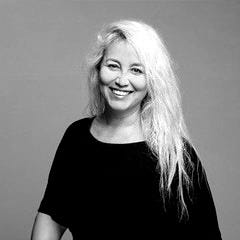
Tamara MC is an award-winning memoirist, essayist, and poet with a PhD in applied linguistics. Her work has appeared in The New York Times, Newsweek, Salon, The Independent, the BBC, and Ms. Magazine, among others. In 2026, she received a Bronze Lowell Thomas Award for Travel Journalist of the Year. She writes at the intersection of language, memory, and survival, and she advocates for girls and women to live free from gender-based violence. She can be found at www.tamaramc.com.


